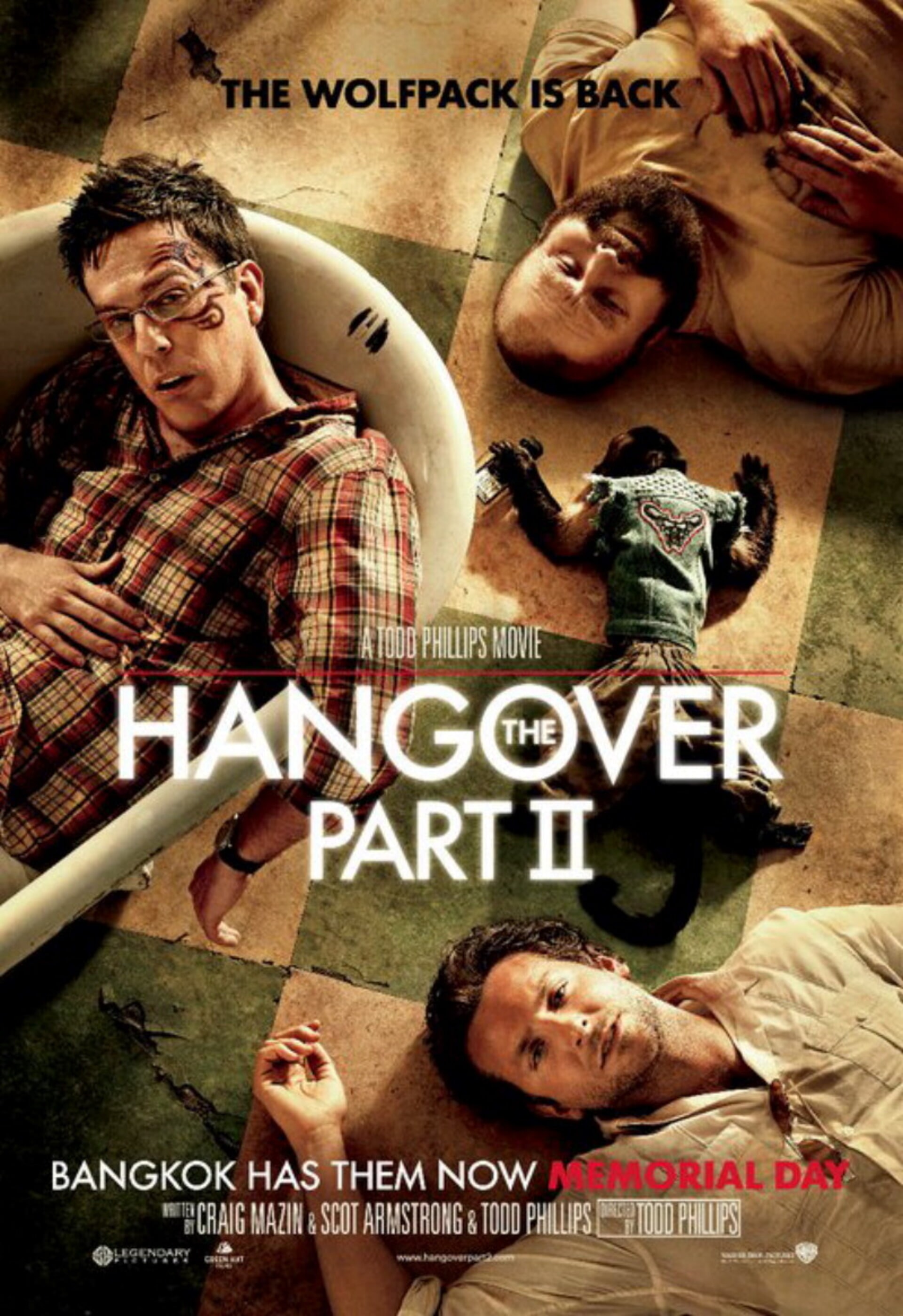
So, you’ve seen it. That moment in The Hangover Part 2 where Stu Price, played by Ed Helms, realizes his wild night in Bangkok involved a bit more than he bargained for. It’s the "ladyboy" scene. People still talk about it over a decade later. Some find it hilarious, others find it cringey, and a lot of folks are just plain curious about the actress who stole the spotlight from the Wolfpack. Her name is Yasmin Lee. She isn't just a punchline; she’s a real person with a career that spans way beyond a shock-value cameo in a Todd Phillips comedy.
Let's be real. When The Hangover Part 2 dropped in 2011, the cultural conversation was in a very different place. The movie was a massive commercial success, raking in over $586 million globally, but it also leaned heavily into stereotypes about Thailand and its vibrant LGBTQ+ community. Specifically, the portrayal of Kimmy, the character Yasmin Lee played, became a lightning rod for discussions about how Hollywood handles transgender representation. Or, well, how it often mismanages it for the sake of a gag.
Why the Hangover Part 2 Ladyboy Plot Point Still Sparks Debate
The scene is basically the ultimate "morning after" realization. Stu finds out he had an intimate encounter with Kimmy, a trans woman (referred to in the film and local Thai parlance as a katoey or "ladyboy"). The movie plays this for pure shock. It’s the "gross-out" humor that defined the franchise. But if you look closer at the industry impact, it’s more complex than just a dirty joke.
Yasmin Lee actually talked about this. She’s been open in interviews about how the role changed her life. Honestly, she knew what the script was. She wasn't blindsided by the humor. In an interview with The Huffington Post and other outlets around the time of the release, she mentioned that she saw it as an opportunity. A huge one. How many trans actresses were getting roles in billion-dollar franchises back then? Almost none. She took a role that was written as a caricature and tried to bring some actual presence to it.
The term "ladyboy" itself is something tourists throw around a lot in Bangkok. In Thailand, the term katoey has deep cultural roots. It doesn't translate perfectly to the Western concept of "transgender woman," though they overlap significantly. In Thai culture, katoey are often seen as a "third gender." They are visible everywhere—from makeup counters to television screens—yet they still face systemic discrimination and lack legal recognition of their gender identity. The movie uses this cultural fixture as a plot device to humiliate a straight male character. That’s the crux of the controversy. It uses a person’s identity as the "worst-case scenario" for a guy who blacked out.
The Reality of Filming in Bangkok
Todd Phillips wanted "authentic" Bangkok. That meant shooting in the Soi Cowboy district and Tilac Bar. If you've ever been to Bangkok, you know these spots are neon-soaked and chaotic. The production wasn't just a movie set; it was a massive operation dropped into the middle of a functioning red-light district.
Yasmin Lee wasn't some random extra they found on the street, though. She was an established adult film performer and actress based in the U.S. at the time. Bringing her to Thailand for the role was a deliberate casting choice. She brought a level of professional polish that helped the scene land, regardless of how you feel about the writing. She has often said that the cast, especially Ed Helms, was incredibly respectful on set. There’s a disconnect between the "disgusted" character Helms plays and the actual professional environment where Lee was treated as a peer.
Breaking Down the Career of Yasmin Lee
Most people search for "Hangover 2 ladyboy" and stop at the movie trivia. That’s a mistake. Yasmin Lee’s story is actually way more interesting than a five-minute cameo in a movie about guys losing their friend in Thailand.
Born in Thailand and later moving to the United States, Lee navigated a world that wasn't exactly welcoming to trans women of color. She didn't just do The Hangover. She appeared in Shameless, Workaholics, and several independent films. She’s a survivor. She’s been vocal about the struggles of being pigeonholed in the industry. For a long time, the only roles available for trans women were sex workers or punchlines. She played both, but she did it with a sense of agency that many people miss.
- Casting Challenges: Early 2010s Hollywood didn't have a "Pose" or a "Euphoria." Roles were scarce.
- The "Shock" Factor: Directors used trans bodies to elicit a reaction from the audience. Lee was aware of this but used the platform to advocate for herself.
- Life After the Wolfpack: She moved into more mainstream advocacy and continued her acting career, proving she wasn't just a one-hit wonder for a comedy sequel.
It’s easy to judge the movie by 2026 standards. We know better now. Or at least, we think we do. But back in 2011, this was one of the most visible representations of a trans person in a mainstream blockbuster. It’s a double-edged sword. On one hand, it’s visibility. On the other, it’s visibility through a lens of ridicule.
The Cultural Impact and Misconceptions
One of the biggest misconceptions? That the movie was banned in Thailand. It wasn't. In fact, it was a hit there. Thai audiences are used to seeing katoey characters in their own media, though often as comic relief. The "ladyboy" trope is a staple of Thai cinema, for better or worse. What bothered some local critics more was the portrayal of Bangkok as a lawless, dirty playground for Westerners.
The scene with Stu and Kimmy is actually a very Western-centric joke. It relies on the "trap" trope, which is harmful and reinforces the idea that trans women are inherently deceptive. In reality, the katoey community in Thailand is quite transparent about who they are. There is no "deception" in a place like Tilac Bar; everyone knows the deal. The movie ignores this reality to make Stu's realization more dramatic.
- Fact: Yasmin Lee is a trans woman in real life.
- Fact: The scene was filmed on location in Bangkok.
- Fact: The movie faced backlash from GLAAD for its use of transphobic slurs and tropes.
Wait, did it actually change anything? Maybe. It forced a conversation. When the movie came out, GLAAD (Gay & Lesbian Alliance Against Defamation) actually reached out to the studio. They weren't thrilled. But Yasmin Lee defended her participation. She argued that being seen was better than being invisible. It’s a tough spot to be in—being the face of a joke while trying to represent a community.
What Travelers Should Know About the Real Bangkok
If you're heading to Bangkok because you loved the movie, keep your expectations in check. The "Hangover" version of the city is a caricature. The katoey community is a vital part of the city's economy and culture. They are performers, business owners, and stylists.
When you visit places like the Calypso Cabaret or even the bars in Nana Plaza, you're seeing a performance of gender that is uniquely Thai. It's not just "men in dresses," as the movie's crude humor might suggest. It's a complex identity.
Honestly, the most interesting thing about the Hangover Part 2 ladyboy scene isn't the joke itself. It's how it serves as a time capsule. It shows us exactly where Western culture was in 2011 regarding trans identities. We were okay with seeing them on screen, but only if we could laugh at the "shock" of their existence.
Moving Beyond the Joke
What should you actually take away from this? First, recognize Yasmin Lee by name. She did the work. She navigated a high-pressure film set and a global press tour where she was often asked invasive questions about her body and her life. She handled it with a lot of grace.
Second, understand that the "ladyboy" trope in cinema is evolving. We’re moving away from the "big reveal" and toward characters who just happen to be trans. If The Hangover Part 2 were made today, that scene would look very different. Or it might not exist at all.
Actionable Insights for Fans and Critics Alike
If you want to dive deeper into this topic or support better representation, here is what you can actually do:
- Support Trans Creators: Don't just watch the big blockbusters. Look for films like Tangerine or shows like Pose where trans people are the protagonists of their own stories, not the punchline of someone else's.
- Learn the Language: Understand that terms like "ladyboy" are specific to certain cultural contexts (like Thailand) and can be offensive in others. Use "transgender" as the standard respectful term unless someone tells you otherwise.
- Watch Yasmin Lee’s Other Work: See her in Shameless (Season 3). She brings a different energy there. It’s worth seeing her range beyond the "Kimmy" character.
- Research Thai Culture: If you're interested in the katoey community, read academic or journalistic work by Thai authors. Get the perspective of the people living the life, not just the tourists passing through.
- Think Critically About Comedy: You can find a movie funny while still acknowledging its flaws. It’s okay to laugh at the Wolfpack’s misery while also recognizing that the script used a marginalized group as a prop.
The "Hangover 2 ladyboy" isn't just a search term. It’s a person. It’s a career. It’s a piece of film history that, for better or worse, pushed a conversation into the mainstream that we’re still having today. Next time you see that scene, maybe look past Stu’s panicked face and appreciate the actress who made the moment iconic. She's the one who actually won that round.