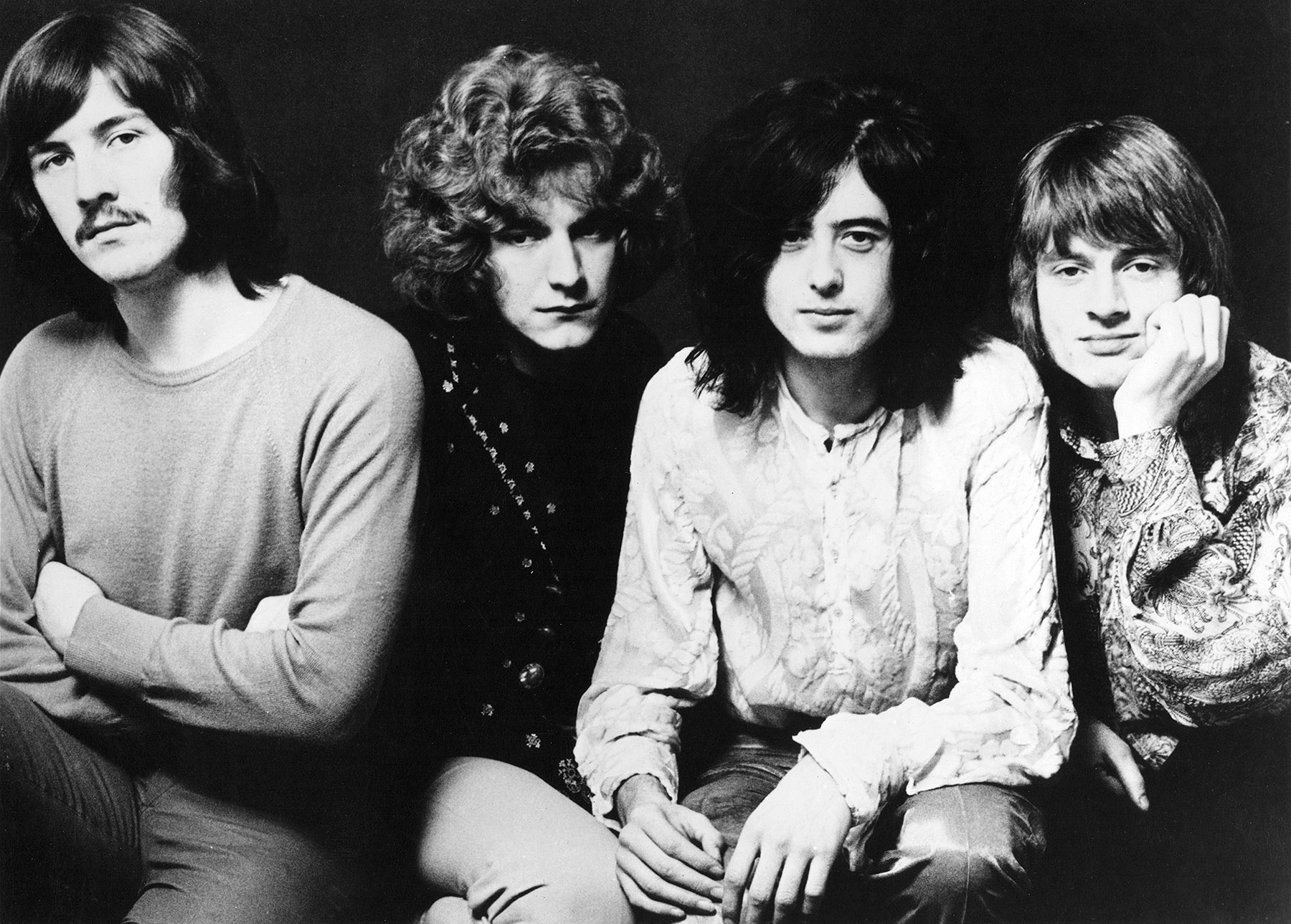
It’s loud. It’s messy. It was recorded in about a dozen different studios across two continents while the band was basically losing their minds on tour. If you pick up a copy of Led Zeppelin II, you aren’t just looking at a piece of vinyl or a digital file; you’re looking at the exact moment rock and roll turned into something much heavier. Most people think of "Stairway to Heaven" when they hear the band’s name, but honestly? This second album is where the real DNA of the group lives. It’s the record that turned Jimmy Page, Robert Plant, John Paul Jones, and John Bonham from a blues-rock outfit into a global juggernaut.
People often argue about which Zeppelin record is the "best." It’s a fun debate for a pub. But Led Zeppelin II isn’t just about quality; it’s about influence. You can hear the roots of Black Sabbath, Van Halen, and even Metallica in those distorted riffs. It was a chaotic production. While the first album was recorded in a crisp 36 hours, this one took months of patchwork. They were recording in Vancouver, Los Angeles, London, and New York. They’d finish a gig, go to a studio at 2:00 AM, lay down a track, and then fly to the next city. You can feel that frantic energy in the speakers.
The "Whole Lotta Love" Controversy and the Power of the Riff
Let’s talk about that opening riff. It’s probably the most famous five seconds in rock history. Jimmy Page played it on his 1959 Gibson Les Paul, and suddenly, the world changed. But here’s the thing: Led Zeppelin II has a complicated relationship with the blues artists who came before it. For years, the band faced criticism—and eventually lawsuits—over how much they "borrowed" from Willie Dixon. Specifically, "Whole Lotta Love" lifted lyrics from Dixon’s "You Need Love," originally performed by Muddy Waters.
It’s a sticky subject. On one hand, Page’s production was revolutionary. He used "distance miking" to get that massive drum sound, placing microphones far away from John Bonham’s kit to capture the natural reverb of the room. On the other hand, the songwriting credits didn't always reflect the influences. Eventually, the band settled out of court, and Dixon is now credited. It doesn’t change the fact that the arrangement was lightyears ahead of its time. The "macho" energy of Plant’s vocals mixed with the psychedelic middle section—full of theremins and swirling stereo pans—was something no one had ever heard in 1969.
Eddie Kramer, the legendary engineer who worked on the album, once remarked that the mix for "Whole Lotta Love" was done on a primitive console where they had to move the faders in real-time to get those "swirling" effects. There was no automation back then. It was just a bunch of guys in a room, twisting knobs and hoping for the best. It worked.
Why John Bonham Changed Drumming Forever on This Record
If you play drums, you know "Moby Dick." If you don't play drums, you still probably know that thunderous solo. This album is where John Bonham became "Bonzo." His sound on Led Zeppelin II is remarkably thick. It’s "The Lemon Song" that really shows off the rhythm section, though. While Page gets all the glory, John Paul Jones is doing some of the most complex bass work of his career on that track. It’s almost a lead bass part.
The recording of "Moby Dick" was essentially a showcase for Bonham’s technique. He used his bare hands on the drums for parts of it. Think about that for a second. The sheer physicality required to make a drum kit sound that loud without sticks is insane. The band was basically building a wall of sound that was impossible for the era’s transistor radios to fully contain.
The Acoustic Side Nobody Expected
Everyone remembers the heavy hits, but Led Zeppelin II also introduced the band’s obsession with "light and shade." This was Jimmy Page’s big philosophy. He didn’t want the music to just be a monochromatic blast of noise. He wanted contrast.
- "Ramble On" is the perfect example.
- It starts with that soft, pitter-patter percussion and acoustic guitar.
- Then, it explodes into a hard-hitting chorus.
- Plus, it’s one of the first times we see Robert Plant’s obsession with J.R.R. Tolkien and The Lord of the Rings.
References to "Gollum" and "The Evil One" in a rock song? In 1969? That was weird. It was nerd culture meeting alpha-male rock culture, and somehow, it was cool. It set the stage for the entire fantasy-metal genre that would follow in the 70s and 80s.
Then you have "Thank You." This was a huge turning point for Robert Plant. Before this, Page wrote most of the lyrics. But "Thank You" was Plant's first real attempt at writing a full set of lyrics for his wife, Maureen. It’s a beautiful, sincere song that proved the band had a heart. It wasn't just about "squeeze my lemon" innuendos; there was a genuine poetic sensibility emerging.
The Technical Wizardry of Jimmy Page
You can’t discuss Led Zeppelin II without looking at Page as a producer. He was essentially the architect. He used a technique called "reverse echo" on tracks like "Whole Lotta Love," where the echo of the vocal actually happens before the vocal itself.
How did he do it? He flipped the recording tape over, recorded the echo on a spare track, and then flipped it back. It’s a simple trick now with digital software, but in 1969, it required a deep understanding of analog tape physics. Page was obsessed with the way sound moved through a room. He didn’t want a "clean" studio sound. He wanted it to sound like you were standing in the middle of a collapsing building.
The album also features "Heartbreaker," which contains one of the most influential guitar solos ever recorded. It’s played "a cappella"—meaning the rest of the band stops and Page just goes for it. It’s a bit sloppy in places, honestly. There are notes that are slightly choked and the tuning is a tiny bit sharp because it was recorded in a different studio than the rest of the song. But that’s why it’s great. It sounds human. It’s not a sterile, perfect take. It’s a guy pushing his guitar to the limit.
Breaking the Beatles' Stranglehold
By late 1969, Abbey Road was the king of the charts. It seemed like the Beatles would stay at Number One forever. But Led Zeppelin II was the record that finally knocked them off the top spot. This was a symbolic passing of the torch. The 60s were ending, the "flower power" era was fading, and a darker, heavier, more industrial sound was taking over.
Critics at the time actually hated it. It’s funny to look back at the original Rolling Stone review where they called the band "the twin of the Jeff Beck Group" and were pretty dismissive of the album’s heavy-handedness. They were wrong. The fans knew it immediately. The album sold millions of copies almost instantly, and it stayed on the charts for 138 weeks.
The Real Legacy of the "Brown Bomber"
The album cover, often called the "Brown Bomber," is based on a photograph of a German Air Force division from World War I. The band had their faces airbrushed onto the pilots. It’s a weird, slightly ominous image that perfectly fits the music inside. It wasn't just an album; it was a branding masterclass.
The legacy of Led Zeppelin II isn't just in the songs, though. It's in the way bands approached the studio after that. Before this record, many rock bands just tried to capture their live sound. Page used the studio as an instrument itself. He layered guitars—sometimes layering five or six different tracks to create a "drone" effect—which gave the music a thickness that was impossible to replicate live with just one guitar.
What You Should Do Next
If you want to truly appreciate what happened on this record, don’t just listen to a low-bitrate stream on your phone. To hear the "air" in the room that Page worked so hard to capture, you need a decent setup.
- Get the 2014 Remaster: Jimmy Page personally oversaw the remastering of the entire catalog about a decade ago. The Led Zeppelin II remaster is widely considered the gold standard. It cleans up the mud without losing the grit.
- Listen to "The Lemon Song" on Headphones: Pay attention to John Paul Jones’ bass line. It’s a masterclass in blues-funk improvisation. Most people ignore the bass, but on this track, it’s the engine.
- Watch the "Royal Albert Hall 1970" Footage: If you want to see these songs played while the ink was still wet, find the 1970 RAH performance. You can see the raw power they had during this specific era.
- Compare "You Need Love" to "Whole Lotta Love": Go back and listen to the Willie Dixon/Muddy Waters original. It’s an eye-opening exercise in how Led Zeppelin took existing blues structures and basically "electrified" them into something entirely new.
The impact of this album hasn't faded. Every time you hear a heavy guitar riff on the radio, you're hearing a distant echo of what happened in those cramped, sweaty studio sessions in 1969. It was the moment rock and roll grew up and got loud.